A Guide to Cabinet Wood: Type, Strength, Look
April 21, 2025

When choosing cabinetry, it’s important to look beyond just the style and finish—what your cabinets are made of can impact how long they last and how well they hold up over time. The visible parts, like doors and drawer fronts, are usually made from solid wood or wood veneers for that rich, natural look. But the cabinet box—the sturdy frame that holds everything together—is often built from engineered materials like plywood or MDF. Each has its own benefits, and understanding the difference can help you make the best choice for your home.
Cabinet Box vs. Cabinet Doors: What’s the Difference?
The cabinet box is the “skeleton” of your cabinetry—it’s what holds everything together behind the doors and drawers. In high-quality cabinetry like Wood-Mode, these boxes are made from strong, furniture-grade plywood. Plywood is made by layering thin sheets of real wood together, making it very durable and resistant to warping or breaking over time.
You might also hear the term MDF (medium-density fiberboard) used in cabinetry. While it’s not used to build the main cabinet box in premium lines, MDF is often used in painted cabinet doors or panels. That’s because it has a super smooth surface, perfect for creating a clean, flawless painted finish. It also doesn’t expand or contract as much with humidity, so your doors are less likely to crack or shift over time.
In short: plywood gives strength and structure, while MDF is often used in detailed or painted areas where a smooth look is important. Together, they’re used in different ways to create a cabinet that’s both beautiful and built to last.
Oak: A Classic That Comes in Many Forms
Oak has long been a staple in cabinetry because of its durability, affordability, and beautiful grain patterns. It’s a dense hardwood, making it resistant to everyday wear and tear, and it takes stain exceptionally well. However, not all oak is the same—there are significant differences between red oak and white oak, and even more distinctions within how the wood is cut.
Red Oak
Red oak has a warm, reddish undertone and a bold, busy grain. It was a staple in homes throughout the ‘80s and ‘90s (think golden oak stair rails and cabinetry) and remains a budget-friendly option today due to its wide availability.
While traditionally seen as dated, modern cabinet makers like Wood-Mode are reviving red oak with updated finishes that wash out red tones and simplify the grain. Their new “American Oak” stains give it a lighter, more refined look—a stunning, cost-effective alternative to rift-cut white oak that’s perfect for clients looking for high style on a tighter budget.
White Oak
White oak, on the other hand, has a cooler, more neutral tone that lends itself well to contemporary and modern designs. It’s also more durable than red oak because of its tighter grain structure and natural water resistance. White oak is often the go-to choice for high-end custom cabinetry because of its refined appearance.
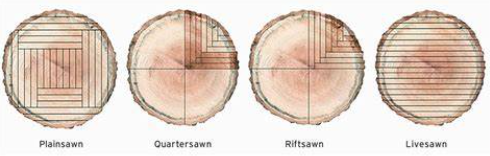
Within white oak, the way the wood is cut drastically changes its look:
-
Plain Sawn White Oak – This is the most common cut, showing cathedral grain patterns that are more traditional in appearance.
-
Quarter Sawn White Oak – This cut produces a straight grain with beautiful flecks, often seen in mission-style furniture and high-end cabinetry.
-
Rift Sawn White Oak – The most premium and expensive cut, rift-sawn wood has a completely linear, minimal grain pattern, making it ideal for sleek, modern designs. Since it produces more waste during milling, it’s also the priciest option.
See chart below for a better visual description of different cuts of White Oak:
 Best for: Homeowners who want a balance of durability and beauty, with options for both traditional and modern styles. Rift-sawn white oak is ideal for high-end contemporary kitchens, while quarter-sawn white oak works well for transitional designs.
Walnut: Rich, Dark, and Luxurious
If you’re looking for a cabinet wood that exudes warmth, depth, and luxury, walnut is a fantastic choice. Known for its deep brown color and rich variations in grain, walnut instantly elevates any kitchen design. Unlike oak, walnut has a smoother, more refined grain with natural waves and curls that add character without looking too busy.
Walnut is a slightly softer hardwood, which means it can be prone to dents and scratches over time, but it ages beautifully. One thing to note is that walnut naturally lightens over time with sun exposure, shifting to a golden brown rather than its original dark espresso hue.
Best for: High-end kitchens where a natural, rich wood tone is desired. Works beautifully for accent pieces, islands, or full cabinetry in modern, transitional, and even mid-century modern designs.
Hickory: The Strongest of Them All
Hickory is one of the hardest domestic hardwoods, making it an incredibly durable choice for cabinetry. It has a striking appearance with dramatic color variations, ranging from pale blonde to deep brown within a single plank. Because of this, hickory is often used in rustic or farmhouse-style kitchens, where its natural variation adds warmth and character.
However, its bold grain and color contrast aren’t for everyone. If you’re looking for something clean and subtle, hickory might feel too busy. But if you love the natural, raw beauty of wood, hickory could be the perfect fit.
Best for: Rustic, lodge, or farmhouse-style kitchens that embrace natural variation and warmth. Great for cabins, vacation homes, or anyone who wants a rugged, durable wood.
Alder: The Versatile Soft Hardwood
Alder is a softer hardwood that offers a warm, reddish-brown hue and a subtle grain pattern. It’s often compared to cherry but is more budget-friendly. Because of its softness, alder is easy to work with, making it an excellent choice for intricate cabinetry designs.
There are two main types of alder used in cabinetry:
-
Clear Alder – This has a smooth, even appearance with little to no knots, making it perfect for a polished, refined look.
-
Knotty Alder – This features visible knots and natural imperfections, making it ideal for rustic or farmhouse-style kitchens.
Best for: Traditional and rustic kitchens where a warm, inviting atmosphere is desired. Works well for distressed or antique-style finishes.
Maple: The Best Choice for Paint-Grade Cabinets
If you’re planning on having painted cabinets, maple is one of the best wood choices. It has a fine, smooth grain that takes paint exceptionally well, allowing for a flawless finish. Unlike oak, which has deep grain patterns that can show through paint, maple offers a more uniform surface. Stained maple also offers that soft grain pattern for homeowners who still want the natural stained wood look, but don’t like the aggressive graining similar to walnut or oak.
It’s also a hard and durable wood, making it resistant to dents and wear. However, because of its tight grain, maple doesn’t absorb stain as evenly as other woods, so it’s better suited for paint or light stains.
Best for: Painted cabinets or homeowners who want a smooth, sleek look without visible grain patterns. Works well in modern and traditional designs.
MDF & Veneers: The Luxury of Stability in High-End Cabinetry
MDF (Medium-Density Fiberboard) is often misunderstood. While it is commonly used in budget-friendly cabinets, high-end cabinetry lines, like Wood-Mode, utilize MDF for cabinet boxes and door center panels due to its resistance to warping and ability to hold paint exceptionally well.
In many luxury kitchens, large decorative panels and full-overlay doors feature an MDF core with a real wood veneer, ensuring a perfect balance of stability and aesthetics. These veneers match the solid wood cabinet faces while preventing expansion and contraction issues that solid wood alone can have.
Other Wood Species to Know
-
Ribbon Mahogany – Offers a high-end, exotic look with a fine, straight grain and deep reddish-brown color.
-
Cherry – Ages beautifully with time, developing a rich, deep red-brown patina.
-
Birch – A cost-effective hardwood that mimics maple but is slightly softer.
Choosing the Right Wood for Your Cabinets
The best cabinet wood depends on your budget, aesthetic preferences, and desired durability. For modern, high-end cabinetry, rift-cut white oak, walnut, and maple are top choices. For rustic or farmhouse kitchens, hickory and knotty alder add character.
Remember: The cabinet box is often constructed from MDF or plywood, while the doors and drawer fronts showcase the beauty of natural wood or high-quality veneers. Understanding this distinction helps homeowners make informed decisions when designing their dream kitchen.
Want to see how different wood species look in real spaces? Check out our Interior Design Portfolio to explore projects we’ve designed.
Written by Karissa: April 21, 2025
Related Posts